
At Classical Pursuits we’ve got Paris on the brain as we prepare for our two 2026 tours: They Came to Paris: Literature 1910–1940 in September, and The Paris Writers’ Café in October.
Along with the team at Worldwide Quest, I’m doing all the things you might expect: reserving museum tickets, booking hotel blocks, waking up early here in North America so that we can get staff at that one restaurant that never answers our emails to pick up the phone before dinner service.
But I’m also doing another kind of preparation I think is just as essential. Over the next several months, I’ll be journeying through Paris as it’s depicted in books, movies, music, and more. Part of the reason for this is educational, to refresh and expand my knowledge of the periods our tours will be focusing on. Part of it is for the sheer pleasure of experiencing these works. And at a deeper level, I do this to try to connect myself to the city, and to let myself be absorbed into Paris as experienced by others.
I’ll be sharing discoveries and rediscoveries on our tour pages. And tour participants get an extensive list of recommendations from Classical Pursuits, updated each year and handpicked from our personal experience (no AI!) to use before and during the tour. I’ve got a few of these to offer today.
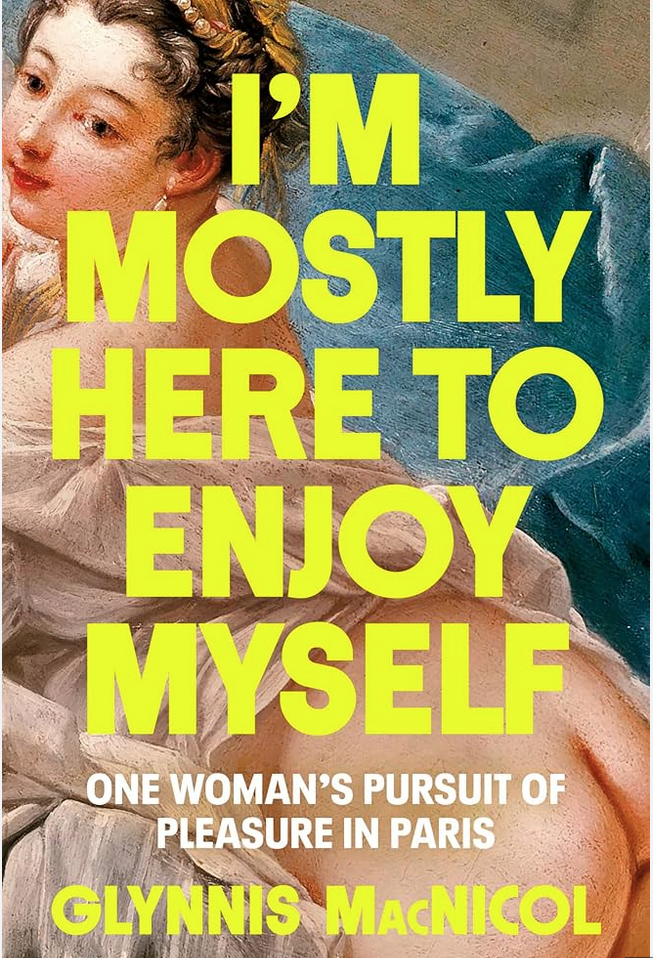 Novelist and poet Lisa Pasold, who will lead the writing workshops for The Paris Writers Café, recommends two books. Her first pick is I’m Mostly Here to Enjoy Myself: One Woman’s Pursuit of Pleasure in Paris by Glynnis MacNicol. For Lisa, “This contemporary single-dame-in-Paris memoir had me laughing out loud in a café (strangers kept asking me what I was reading!).”
She is also reading Julian Barnes’ nonfiction The Man in the Red Coat, inspired by John Singer Sargent’s lush study in red. She finds the book fascinating “because Paris of the late 1800s was packed with such wonderfully eccentric characters. The divine Sarah Bernhardt, the beautiful, batty Comte de Montesquiou, and of course handsome Doctor Pozzi, subject of Sargent’s painting.”
Writer and musician Samuél Lopez-Barrantes is leading our walks for They Came to Paris: Literature 1910–1940. From the Café de la Mairie, one of our favourite places for people-watching, he reflects on time, light, and how we showcase and avoid history in his Substack series “An Attempt at the Inexhaustibility of Paris.”
As Samuél writes, “[B]ut putting Paris into words is a tricky business, for it detracts from the lived experience, somehow, and there are more than enough people with camera phones, even here on this very terrace, making foolish attempts to capture Paris’ essence.” But at the same time, “which real-life writer living in Paris hasn’t sat down to depict their particular Parisian life forever careening in front of them?”
You can read part 1 here, and part 2 is here.
And I spent a few days over the holiday catching up on Paris-centric movies and TV while I wait for the new film Vie privée to be released in North America. I lived abroad for much of the early 2000s and although I went to the movies a lot during that time, I still have many gaps.
So I watched Before Sunrise and Before Sunset. OK, the first movie is set in Vienna, but the films go together. I was interested in how the characters Jesse and Céline move through the cities they’re in, inspired by them, but are also completely in their own world. As someone who loves thinking about language, I also like how these films embrace all that happens when people talk: moments of awkwardness, false starts, lulls, exhilaration, a sense of truly being understood, all of it.
 I also rewatched De battre mon cœur s’est arrêté (The Beat That My Heart Skipped). I’ve been crushing on Romain Duris for a long time and always love a good (neo)noir. This movie has an electrifying energy and a fantastic soundtrack. Among other things, it’s an examination of a hold a father has on his son. The Paris here is a Paris of the plush reds of concert halls and the blue-gray shadows of winter afternoons in grimy cafés.
And I rewatched part of Lupin in anticipation of the new season in fall 2026. The fabulously suave Omar Sy is so fun to watch. And the show takes you on a wild ride through some of the most best-loved places in Paris. A bonus to look for: The exterior of the grasping Hubert Pellegrini’s mansion is one of our favourite lesser-known museums, the Musée Nissim de Camondo.
I also want to include a practical resource for you. I use the Easy French channel on YouTube to work on vocabulary with my advanced-beginner student. It’s a great way to hear people talking about stuff you actually care about in a truly conversational way. (NB, YouTube may make you sign in to watch the videos; it’s getting harder to watch without signing in.)
Finally, more ways to connect with us: Meet Lisa on January 22 for our online talk on women writers of the Paris café. Meet Samuél at his upcoming lecture + discussion series Existentialism as a Response to Fascism starting February 8. We’re happy to tell you more about these programs; write us at info@classicalpursuits.com or call us at 1-844-869-1001.
Enjoy these recommendations! We hope to see you in Paris.
Image credit: De battre mon coeur s’est arrêté movie poster, CineMaterial.com