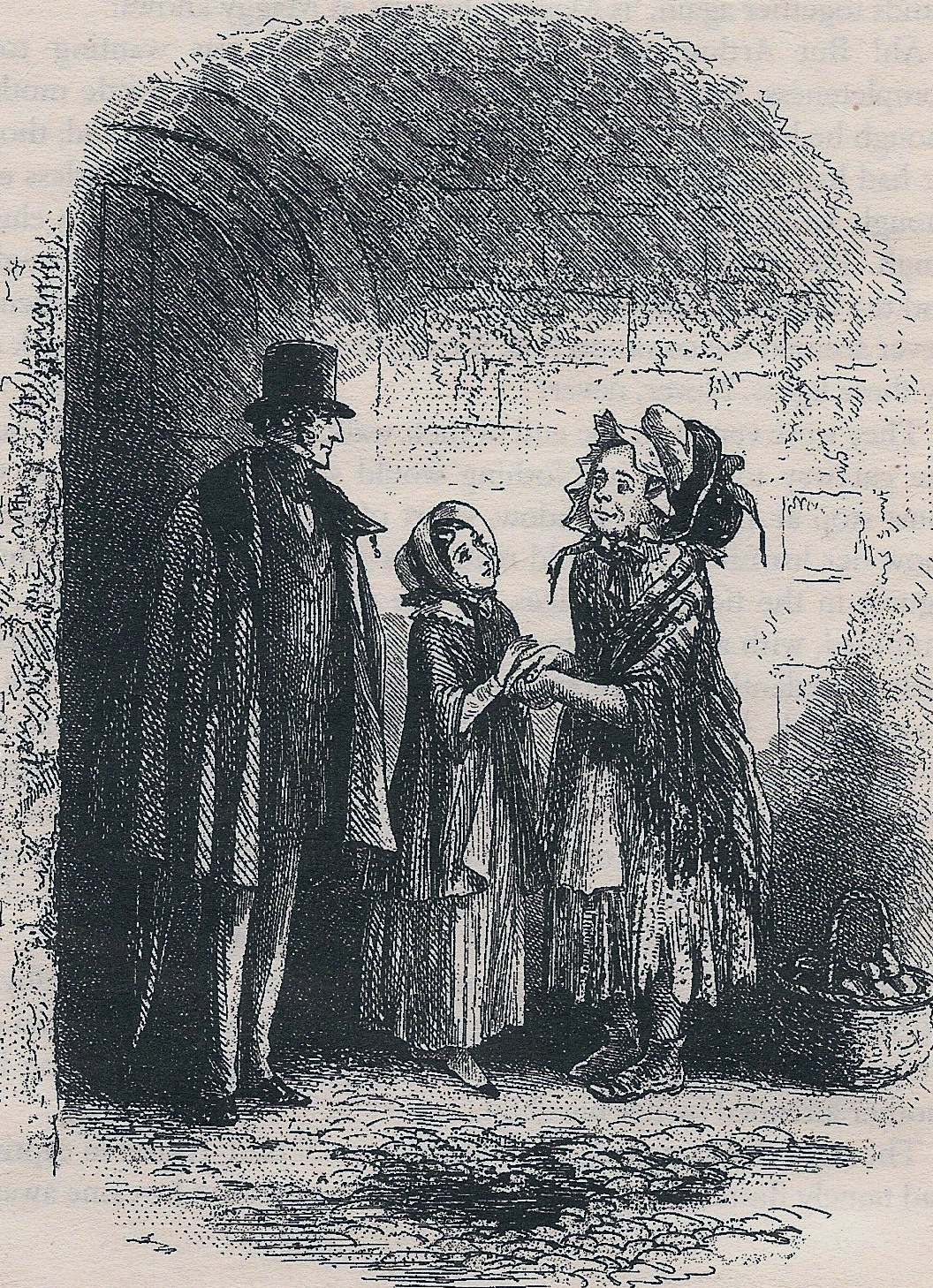
Charles Dickens would have approved heartily of the tagline used by the 1970s comic book series Howard the Duck – “Trapped in a world he never made!” In Little Dorrit, written when Dickens was more than two decades into his career as an author, he focuses on the question of how to live a meaningful, ethical life in a society filled with systems that are beyond individual control or understanding. In our seminar we’ll explore this novel’s engagement with its own time and consider what its insights offer for our own era.
Biographer Peter Ackroyd noted, of Dickens’ experience writing Little Dorrit, that “the narrative seemed to enlarge and expand as he wrote it.” Dickens drew on a variety of experiences to construct the novel. These include his international travels; his recent (and disappointing) reunion with his first love, Maria Beadnell; his childhood experiences of his family’s financial troubles; and the scandal of John Sadleir, a politician and financier who killed himself after his swindling and disastrous speculations were exposed.
The class distinctions that are always a part of Dickens’ writing are, in this book, newly pointed, and the satire directed at aristocrats, bureaucracy, and the wealthy is angrier. After A Christmas Carol, I see Little Dorrit as Dickens’ most direct critique of the financial and social systems that wildly enrich the few while consigning many to poverty.
In another author’s hands, a story named for a girl who grows up in the Marshalsea, London’s prison for debtors, could be too unrelievedly dark. But Dickens creates an array of fascinating characters, ranging from French con artists to angry maids to laughably incompetent heirs to nobility. While it often seems that the virtuous characters are hopelessly outnumbered and outmaneuvered, Dickens’ characterizations and storylines remind us that resistance and flourishing are possible even in desperate circumstances. In Amy Dorrit and Arthur Clennam, Dickens fully develops a theme that recurs throughout his work, that of the innocent child facing a harsh world.
In our Toronto Pursuits 2026 seminar How to Live in Chaos: Dickens’ “Little Dorrit” we will look at the many facets of this richly detailed work and share our puzzlement as well as our observations. One of the delights of discussing Dickens is discovering elements we might have overlooked and seeing plot points in a new light. A key theme of Little Dorrit is the necessity of community, and in this seminar we will work to construct our own collaborative and creative fellowship.
Nancy Carr is a a longtime seminar leader, focusing on Victorian literature. She earned a PhD in literature from the University of Virginia and is an Instructional Designer in the School of Social Work at Loyola University Chicago.
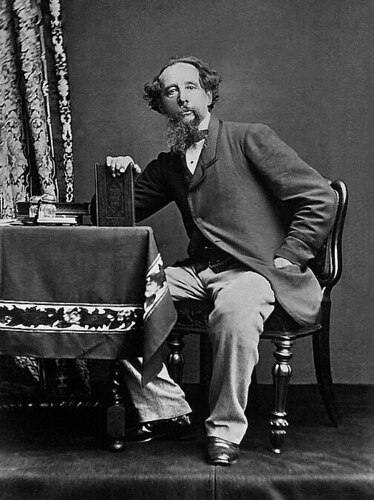
Image credits: Little Dorrit, Amy as the mother of the Marshalsea, by Hablot K. Browne; Charles Dickens, Watkins Studio, Public domain, via Wikimedia Commons