
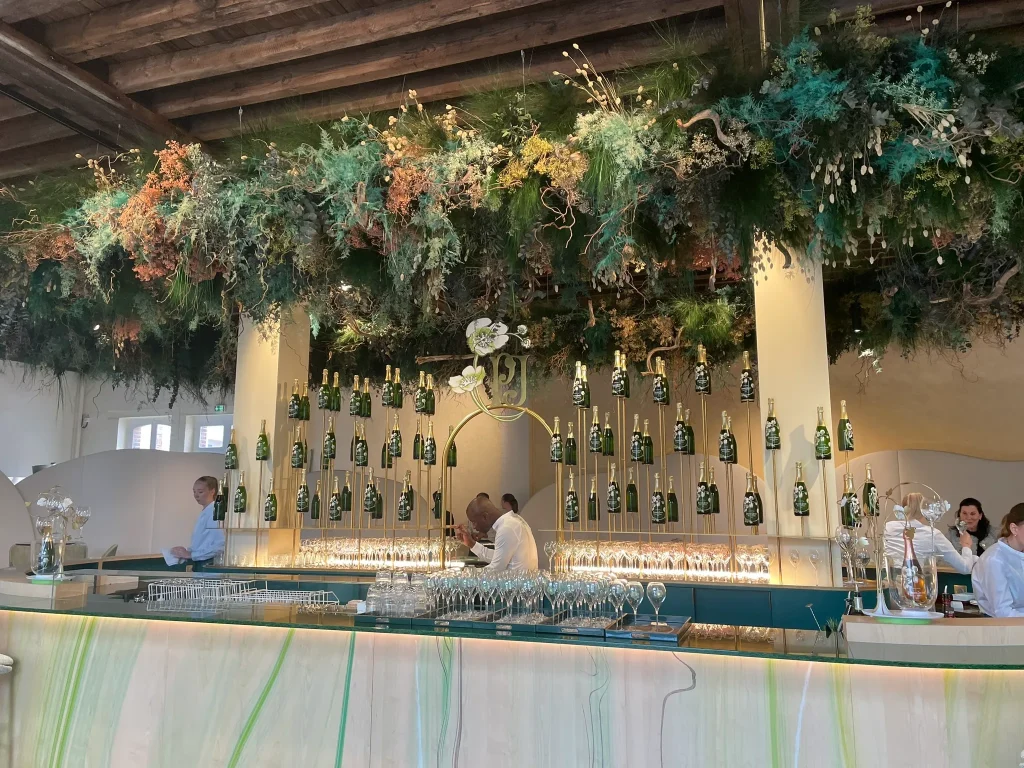
It’s not often that you get to stand on top of $2 billion.
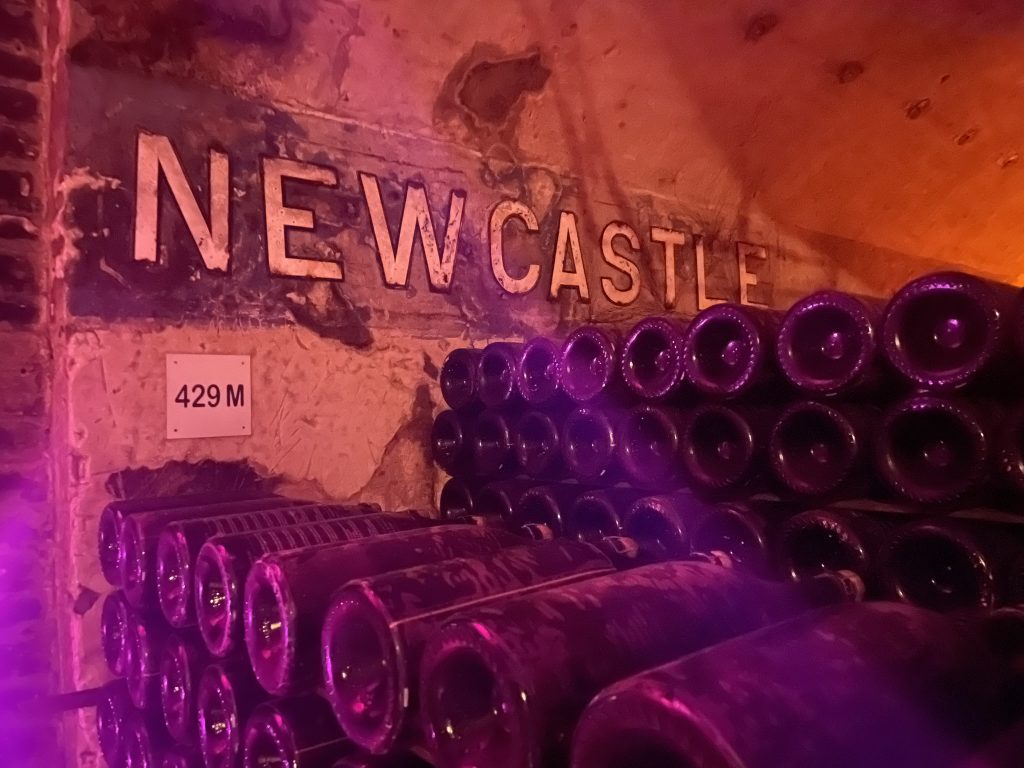
That’s the approximate value of the millions of Champagne bottles storied under the Avenue de Champagne, in the town of Épernay.
And it’s not everywhere that you get to see 70 million years of history displayed before you. Millions of years ago, northeastern France was an ocean. As the ocean waters receded, what was left was the thick former seabed of limestone and sandstone. Millennia later, people would realize this mix was excellent for growing grapes and, deeper down, storing bottles of Champagne at constant temperature and humidity in the more than 60 miles of chalk cellars that would eventually be dug.
Above and below ground, the elegant Avenue de Champagne in Épernay is a feast for the mind and the senses, and one of the places we are excited to visit with you on our upcoming tour Art and Resistance in WWII Paris and Champagne. In this essay, take a stroll with Classical Pursuits through the history of this street.
Before there was Champagne, there were the Romans. Their road system connected modern-day nearby Reims with Strasbourg and points farther east. Épernay was a marshy, brambly area that was the site of a Gallo-Roman settlement that most sources say dates to the early 5th century CE.
As political fortunes—and with them the map of France—changed, Épernay as we know it began to take shape. Historians know there were large land holdings outside the city walls, in the area where the Avenue de Champagne now is. In 1145, a wealthy citizen built a hospital in this area, and the road that led to it was called “chemin de l’Hôpital.” It later became “rue de la Folie.”
The 17th century brought infrastructure developments. In 1744 the road was part of the newly completed route royale (royal road) no. 4, connecting Paris and Germany. (Louis XVI would later use this road to flee Paris during the Revolution.) About a decade later the city gate that separated Épernay from the road was torn down, and in 1793 the road was paved with sandstone.
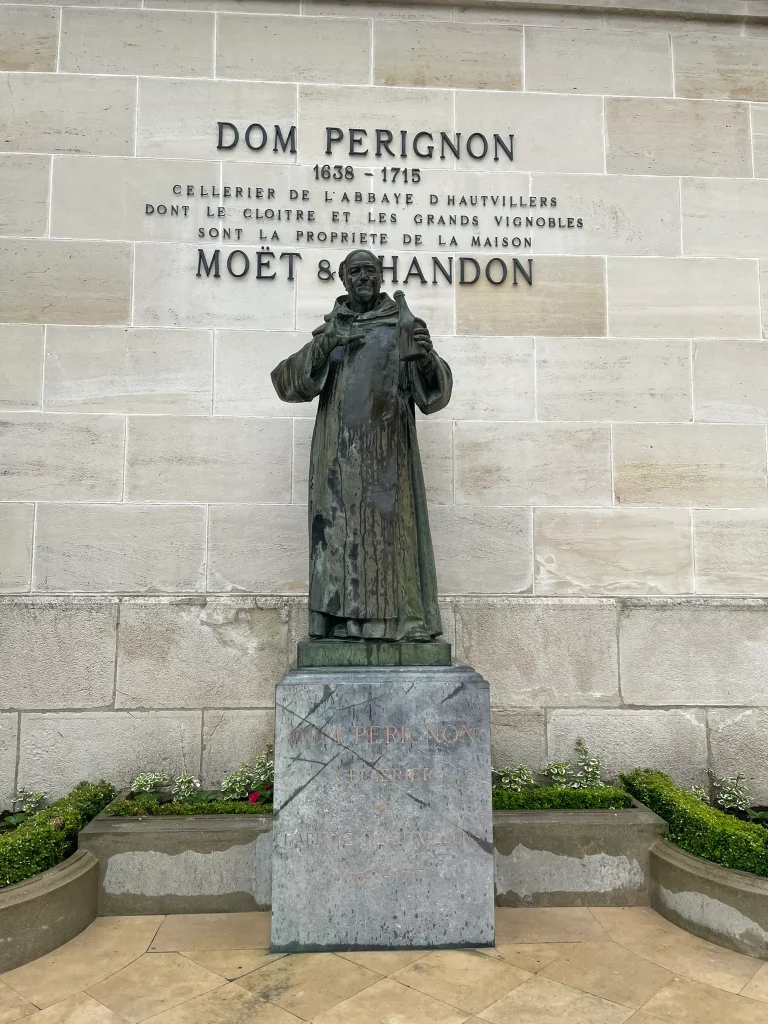
According to Véronique Foureur, the historian at Moët & Chandon, this was also the year that Jean-Rémy Moët established his Champagne house along the road, in part to take advantage of being on this major trade route. In 1720, his grandfather had dug a small cellar (cave) here. He was the first to do so in Épernay as he sought to perfect the méthode champenoise of in-bottle fermentation that had been perfected in England. (Mais oui! What about Dom Pérignon, you may wonder? Look for more on him in later posts.) City records note in 1805 that Champagne houses had recognized the superiority of the cellars dug along what was now Rue du Commerce, and were quickly expanding here.
Throughout the 1800s more headquarters, offices, and reception houses sprang up, along with private houses of Champagne producers and merchants. There was the Château Perrier, today a museum, the Château de Pékin (Beijing) named after Napoléon’s entry into the Chinese capital, and lovely, flower-filled Perrier-Jouët. Entrepreneurial-minded Champagne producer Eugène Mercier dug his caves in such a way to connect them directly to the railway that had arrived in 1849, linking Paris and Strasbourg.
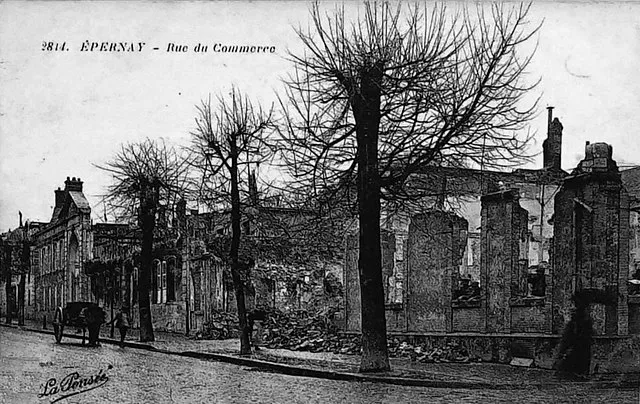
Cellars were raided in the Franco-Prussian war and the early part of WWI, with thousands of bottles of Champagne taken by the German army. And in July 1918, most of the buildings lining the Avenue du Commerce were destroyed by shells and bombs. As happened throughout France, Épernay and the Champagne industry were rebuilt after the war, and in 1925 the municipal council renamed the road Avenue de Champagne.
During WWII, the Nazis commandeered the cellars again to meet their insatiable demand for Champagne: some 90 million bottles. You read that right. Ninety million bottles purchased ‘legally’ (in a very loose sense of the word), purchased on the black market, or outright stolen, according to historian Kenneth Mouré.
Foureur recounts how Champagne producers attempted to protect the fruits of their labour. Moët & Chandon house sealed off some of the older parts of their cellars, hiding bottles from theft. The region became an important part of the Resistance: Records for the Nazi’s orders and deliveries of Champagne and other luxury alcohols provided intelligence on where attacks or other large military efforts were expected to take place, and the caves provided protection for Resistance cells and citizens. Some Champagne producers served as invaluable Resistance liaisons. And of course in Reims, the German forces signed their surrrender at a local school, now the newly renovated Musée de le Redditon and a highlight of our tour. Bryn and our sommelier guide will share the history of the Champagne region during WWII as a way to see Épernay and the region from a different angle.
Today along the Avenue de Champagne, as in the 19th century, there is a dizzying array of architectural styles from renaissance to art nouveau represented in huge houses like Moët and in smaller ones like producers you may have yet to discover. Admiring the eclectic mix is one of the joys of walking along the current avenue. During the school year, students from the lycée (high school) Stéphane-Hessel enliven the avenue. And a glass of Champagne is never far away!
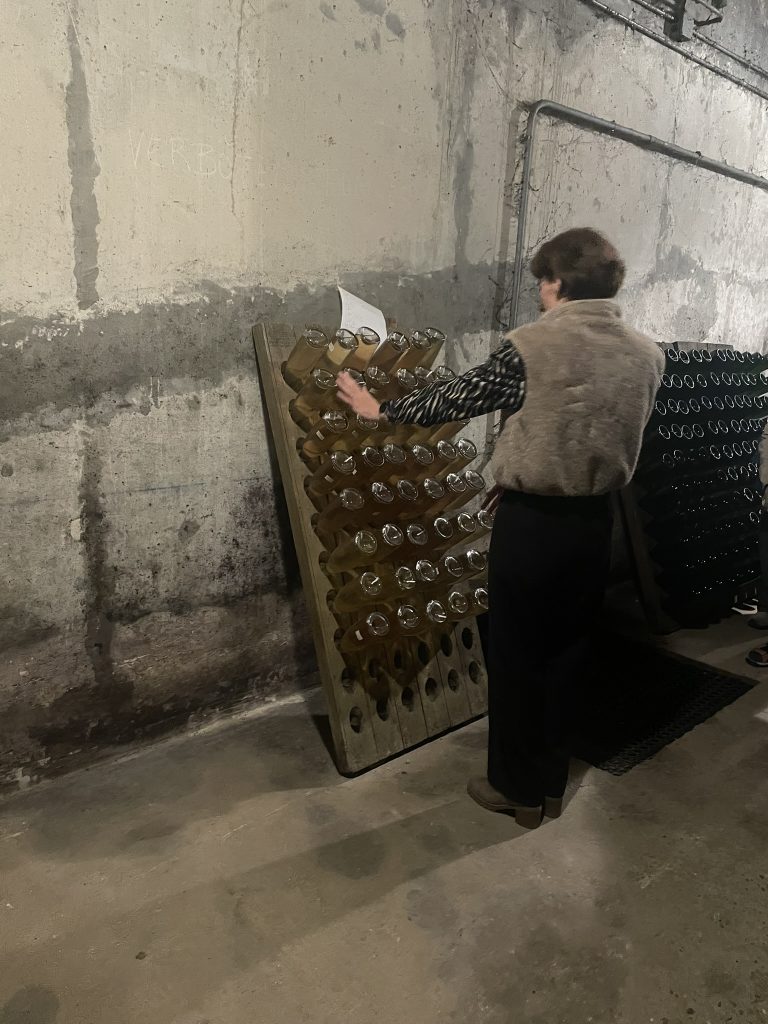
On our tour, we’ll visit the showstopper Pommery estate in Reims, with a special surprise at its Villa Demoiselle, a lovely art nouveau house that was built for the Pommery estate’s director in the early 1900s. You’ll also have a chance to walk though some of its miles of caves, with junctions that double as art galleries. We’ll get a different look at Champagne making at Texier, a small house run by a husband-and-wife team. You may be able to try your hand at riddling the bottles. Riddling, or remuage in French, is the process of turning the bottles an eighth or a quarter turn at a time, while also gradually tilting them, to loosen the sediment in the wine bottle so that it collects in the bottle neck and can later be disgorged. Experts like the Texiers can turn 25,000 to 40,000 bottles a day. You might not get that close, but it’s fun to try.
Join leader Bryn Turnbull and our specialist guides for Art and Resistance in WWII Paris and Champagne for what will be a moving, insightful, and only-at-Classical-Pursuits experience.
For more information, see the tour page, email us at info@classicalpursuits.com or call toll-free to 1-800-387-1483. You can also request a detailed itinerary here.
A bientôt!
Sources: “À Epernay, l’Avenue de Champagne cache 200 millions de bouteilles!” (La revue du vin de France); “Hidden Under This Street in France Is a Fascinating History—and Champagne Worth Billions” (AFAR); Mouré, Kenneth: Marché Noir: The Economy of Survival in Second World War France, Cambridge UP, 2023; “Champagne and its history” (Comité Champagne); “Champagne Hillsides, Houses and Cellars” (ICOMOS/UNESCO); “Épernay” and “Avenue de Champagne” (Wikipedia); “The Roman Roads of Gaul Visualized as a Modern Subway Map” (OpenCulture)