
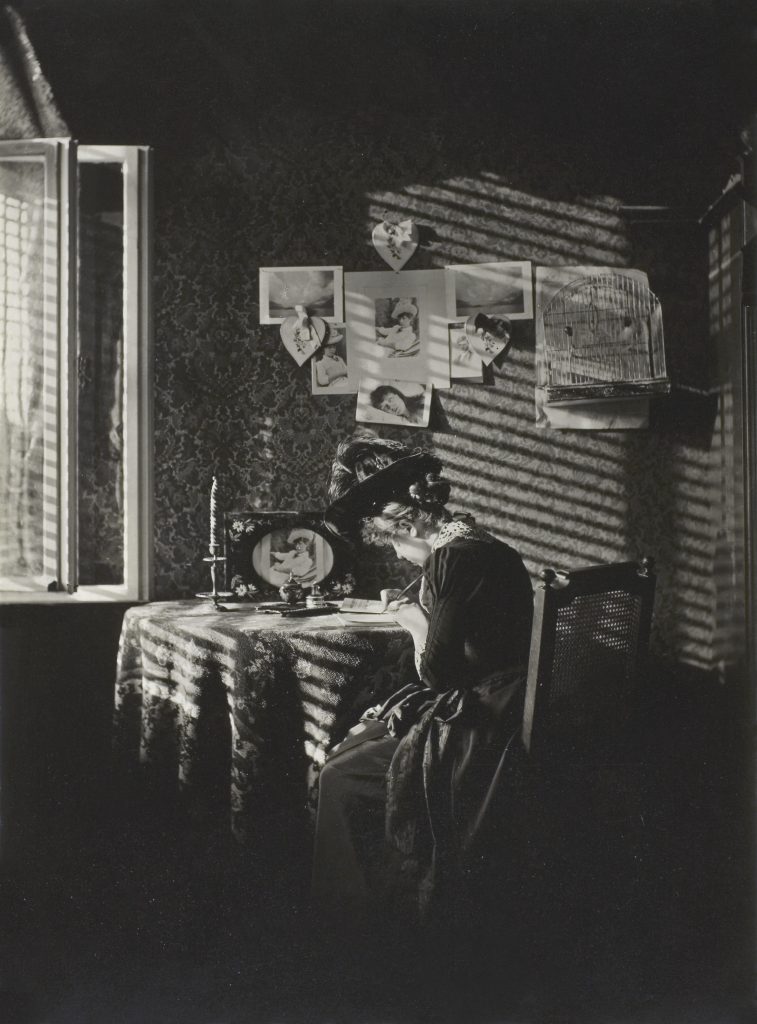
“In photography, there is a reality so subtle that it becomes more real than real.”
— Alfred Stieglitz
Photography in our time is going through a crisis of ontology. Ontology is a fancy philosophical term for something that is commonplace and, perhaps because it is “ordinary” as it were, goes unnoticed and unconsidered. Ontology asks the question, “What kind of thing is this?” (Or what kind of being does this thing have, to be more accurate.) If we ever watched Sesame Street and played the “one of these things is not like the others” game, we were being ontologists. In trying to identify which of four items didn’t belong in a group or a category (think lettuce, celery, carrot, and watermelon, for example), we were deciding what kind of things or what category of things most of these items belonged in. We face similar questions when we are trying to determine if aliens (or angels) exist, or whether a particular action demonstrates “love,” or something else.
So now, let’s apply that practice to photography: Just what kind of thing is a photograph? To begin with, are all pictures taken with a camera works of art? If not, how do we decide what is a photograph and what is just a picture? (Think of the complicated question of determining if a tomato is or is not a vegetable, in this context.) Now, we might say, “Who cares?” Well, lots of people do. If our works are photographs, they are shown in galleries and not just shared with friends. They have a monetary value, and, if we take photographs, we are photographers and hence artists, which entitles us to grants and tax write-offs and to a status that others don’t have.
That is just the beginning of the questions that prevail concerning the present state or status of photography. Is the kind experience that is recorded in an image translatable into words, or are there some things that only an image can “tell”? Does a photograph mirror reality, or does it create a reality? (Think metaphysics—the study of what is real.) Does it bear witness to a truth, or does it create a truth? (Think epistemology—the study of what we know.) Are there some moments that are too violent, too easily misconstrued, too private, that they should not be photographed? (Think ethics— what is good, right or just.)
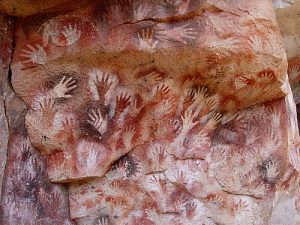
(7,300 BCE to 700 CE)
These are not questions new to our times. In the beginning, we were makers and communicators in/of images. Our earliest known art works reside in the caves in Liang Metanduno cave on Muna Island in Sulawesi, Indonesia, dating back 67,800 years. These are perhaps the oldest of many such images in caves across the world. Yes, we were always visual thinkers. What is different in/to our times is the proliferation of images that we encounter. It seems like everyone, everywhere, all the time is making pictures or at least taking pictures (a topic we will need to consider). On average, people have between 1,500 and 2,800 pictures on their phones at any one time. What is it that they are trying to capture? What is it that they are curating? Are they artists of their own lives, or documenters of their times?
And we are just getting started here.
This July, I invite you to join others who love photography, its power, its potential, and its complications for my seminar Picture This: Phenomenology in/of Photography at Toronto Pursuits. The questions raised here are just a few that we’ll raise that reside at the intersection between philosophy/phenomenology and photography. Join me for a week devoted to image and text, and consider just what it is we do when we press the button on our cameras.
I can’t wait!
— Wendy
Wendy O’Brien is a philosopher and avid reader. With over 30 years’ experience teaching in post-secondary education, she’s given talks and led seminars on creativity, beauty and wonder as responses to the existential crises of our times. Working at the intersection of philosophy, literature and the visual arts she has offered seminars and talks at Humber College, Oxford University, Harvard, The Art Gallery of Ontario, The Women’s Art Association, and the Toronto International Festival of Authors. In 2020 she retired from academe to focus her attention on The Wonder Project, a long-term investigation into the concept of wonder and its relation to artistic excellence, natural beauty and scientific discoveries.
Image credits: Sun Rays—Paula, Berlin (1889) by Alfred Stieglitz. Original from The Art Institute of Chicago. Digitally enhanced by rawpixel; Cueva a las Manos, Creative Commons/Wikipedia
