Impressionist Paris Tour Overview
It is 1874 in Paris, and a radical bunch of independent artists are exhibiting their work outside the official state-run Salon. They include painters Claude Monet, Berthe Morisot, and Paul Cézanne. Their work was being shown to the public on the Grands Boulevards, in the glamorous photography studio of their friend, Félix Nadar.
When you think of Impressionism, you may not think of photography. But new technology was intimately involved in the painters’ breakthroughs. Monet and Caillebotte especially loved the inventions of daguerreotype and photography—both as social commentary, and, practically, as a way to capture an image to paint later on. The city was a fascinating subject for the new medium.
On this new tour, get a fresh perspective on the Belle Epoque as a time when old arguments and new ideas were reshaping how Parisians lived.
What did Paris look like in 1874, so soon after the Paris Commune? The civil war between the Communards and the government had resulted in devastating battles across the city’s landscape and brought to the fore questions about the future of the republic, the relationship between church and state, women’s and workers’ rights, and much more.
But Paris was recovering, already back as a beacon of creativity and invention, its Haussmann renovations a marvel, its World Fairs showcasing innovations in transportation, communication, architecture and public space, food and consumer goods, and much more.
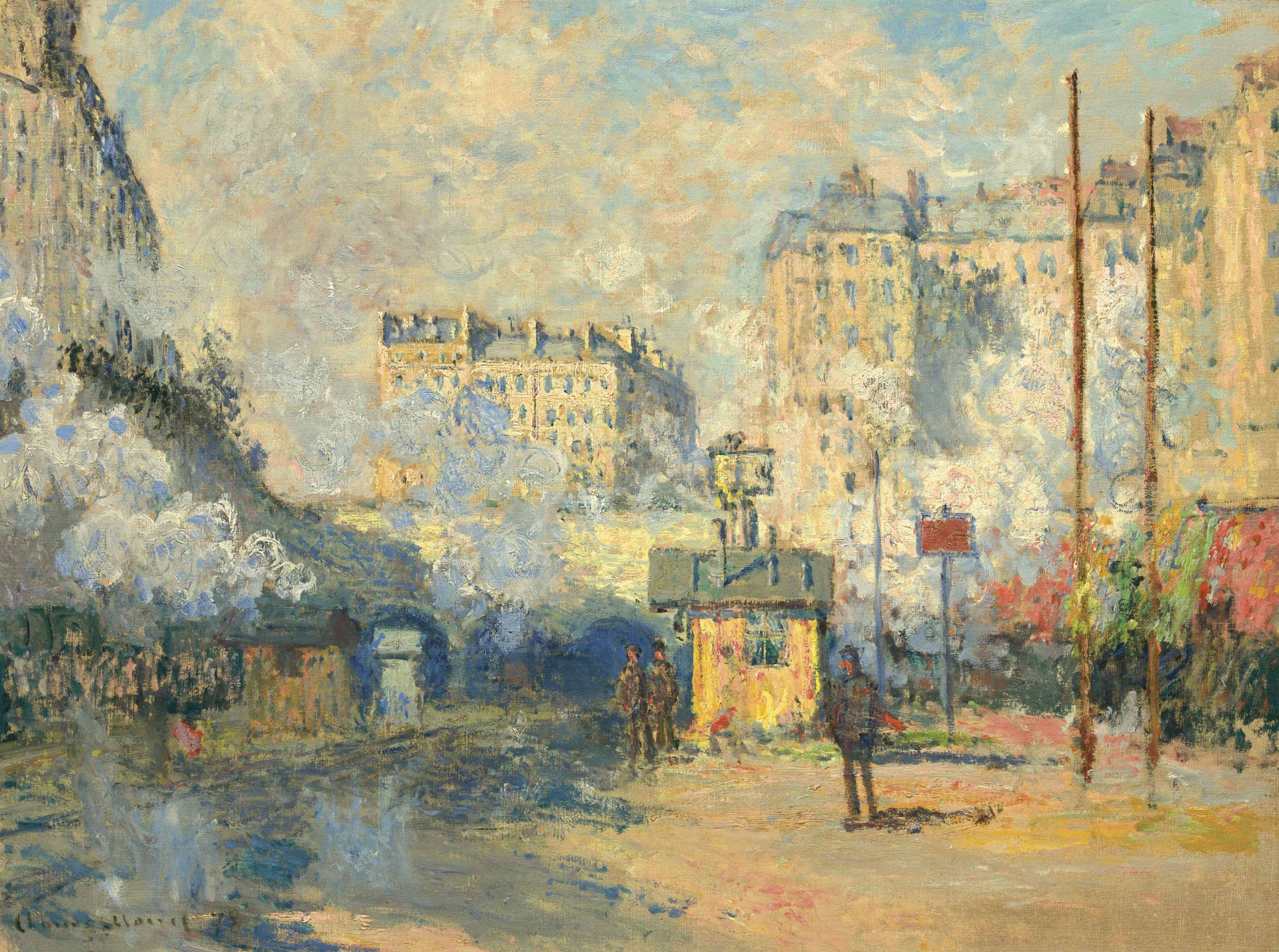
We’ll pay close attention to the great changes underway, including the astonishing train stations, so beautifully painted by Monet. And we’ll look at the smaller important details, such as the invention of the paint tube, which allowed Impressionists to paint outside. We’ll also visit the streets where the painters lived and found inspiration alongside their writer friends—like Emile Zola, who wrote with obsessive detail about the material and social lives of Parisians. And we’ll look at the lasting contribution of women in this movement, particularly the impactful work of Mary Cassatt and Morisot.
Through guided walks and lively seminar discussions, we’ll bring the epic and the everyday together, connecting paintings, photographs, literature, and the streets of Paris to explore the world that gave birth to Impressionism. You’ll leave with a richer understanding of the movement’s radical origins, a sharper eye for its art, and a new appreciation for the city whose upheavals and innovations helped remake modern urban life.
Accommodation
Classical Pursuits’ longtime home in Paris is the Hôtel Le Littré. The hotel is in Paris’ 6th arrondissement, on a quiet street between the rue de Rennes and the rue de Vaugirard. Guest rooms are a generous size by Paris standards and are equipped with air conditioning, TV, safe, minibar, hair dryer, and free WiFi. A varied buffet breakfast is served in the elegant restaurant.
Itinerary at a Glance
Day 1: Arrive to Paris / discussion + welcome dinner in Montparnasse
Day 2: Montmartre walk + optional museum visit / cooking class
Day 3: Left Bank walk / Musée d’Orsay visit
Day 4: Day out in Auvers and Giverny
Day 5: Discussion / Orangerie visit
Day 6: Saint-Lazare and Batignolles walk / Musée Monet Marmottan visit / farewell dinner
Day 7: Departure
Readings
“The Painter of Modern Life” and selected poems by Charles Baudelaire
Selections from “When I Was a Photographer” by Félix Nadar
“The Impressionists and Edouard Manet” and selected poems by Stéphane Mallarmé
“The New Painting” by Edmond Duranty
Selected letters of Mary Cassatt, Berthe Morisot, and Vincent van Gogh
These primary sources bring us as close as possible to the world the Impressionists themselves inhabited: the rapidly changing Paris of the 1870s, the shock of photography and new technologies, the challenge to the official Salon, the voices of artists, critics, poets, and writers debating what modern art could be, and the lived experience of figures such as Berthe Morisot, Mary Cassatt, Monet, Manet, and van Gogh. They help us take on questions such as, Is modernity something the artist records, or something the artist invents? Are the Impressionists rejecting tradition, fulfilling it, or changing the terms by which painting should be judged?
Practical Details and Next Steps
Requesting an itinerary is a great way to help decide if this tour is for you. We’re also available to talk by email at info@classicalpursuits.com or on the phone toll-free at (844) 869-1001. You can also book online.
Once you’re ready to join, our colleague Abbie at our partner Worldwide Quest is happy to get you started with information about putting down a deposit and the tour payment schedule. You can reach her at abbie@worldwidequest.com or 1-800-387-1483. Classical Pursuits offers a number of pre-tour online experiences for each tour, all of which are free or deeply discounted for tour participants.
All Classical Pursuits tours are sold by and operate through our longtime partner Worldwide Quest, a licensed Ontario tour operator and an IATA Accredited Agent that was created in 1970 (as Quest Nature Tours and Worldwide Adventures). All participants on Classical Pursuits trips are covered by the terms of the Ontario Travel Industry Act (Worldwide Quest Inc., Ontario License #2667946).