
[Editor’s note: Bryn is leading our May 2027 tour Art and Resistance in WWII Paris and Champagne. Join her for an unforgettable journey.]
The threads of a novel can come together in so many different and often surprising ways. In the case of my third novel, The Paris Deception, the first spark of inspiration came courtesy of my brother, who challenged me over a glass of Veuve Clicquot to write a story he would enjoy better than his favourite movie: The Thomas Crown Affair.
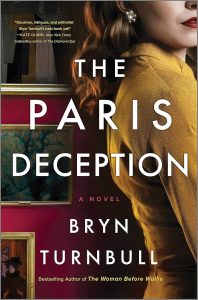
At the time, I’d recently read about the audacious Dutch art forger Han van Meegeren, who’d been arraigned in 1947 on charges of selling a fake Vermeer to Hermann Göring, and I thought if I could tie together the notion of an art heist with the notion of an art forger operating during the war, I’d have the beginnings of a story.
Add in a few other twists and turns — the Nazi notion of “degeneracy” in art, thought, and expression; the wartime heroism of museum curator Rose Valland; and, of course, Champagne — and The Paris Deception began to take shape.
It seems to be something of a rite of passage for historical fiction authors to write about the Second World War. Our collective fascination with the war and all that goes along with it is understandable, especially in recent times where political and social divisions seem so terribly fraught: We can look back on a time where the good guys won. Where people stood up to hatred, and fought for the defence of all they held dear: freedom of thought, of expression, and life itself.
Of course, the reality of the times wasn’t quite so cut and dry. In countless cases, especially in the early 1940s, evil won the battle, if not the war. In Nazi-occupied Europe, there was no guarantee that a bright dawn would follow those darkest of days.
During World War II, German forces plundered hundreds of thousands of works of art — an estimated 20 percent of all artworks in Europe — from people opposed to Nazi ideology, including Communists, Freemasons and, most prominently, Jewish families. In Paris, most of this artwork ended up in the Musée du Jeu de Paume, a small museum located within the Jardin des Tuileries. During its four-year tenure as a repository for the Einsatzstab Reichsleiter Rosenberg (ERR), an estimated 22,000 stolen works of art passed through the museum, where they were either transferred into the Reich, exchanged with other dealers, or destroyed.
When the ERR moved into the Jeu de Paume, Rose Valland was the sole member of the museum’s existing staff to stay on payroll. And while many suspected her of collaborating with the Germans, Valland risked her life to safeguard the artwork within the museum. Under the direction of Jacques Jaujard, director of the Musées Nationaux de France, Valland served as an operative for the French Resistance and despite the constant threat of being discovered, Valland secretly recorded every movement of the ERR within the Jeu de Paume, concealing her ability to speak German in order to monitor and pass information about the ERR’s looting on to the Resistance.
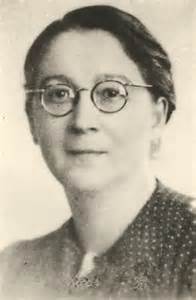 It is Rose Valland’s story that I borrow in The Paris Deception, sharing her heroism with my fictional main character, Sophie, an art conservator, and her sister-in-law, Fabienne, an artist-turned-forger who helps Sophie protect works of art from the Germans.
Once world travel opened back up after the Covid-19 pandemic, I travelled to Paris to experience the city for myself. For someone who lives in Toronto — a city notorious for its lack of respect towards historical architecture — being in Paris allowed me to step back in time in a very real way: to experience streets and sights that would have been familiar to anyone living there during the 1940s. I wandered through the Marais and along the Seine; through the Jardin des Tuileries, plotting a heist, and to the Cimetière du Montparnasse, to choose the most suitable grave over which to have a clandestine conversation.
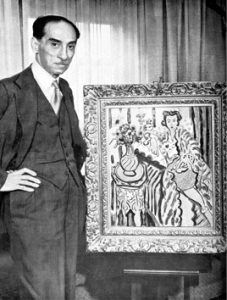
The magic of Paris wound itself into the novel in ways I hadn’t anticipated. Finding the Jeu de Paume locked behind the tall fence surrounding the Jardin des Tuileries, for instance, entirely changed a pivotal moment in the novel; wandering into Le Meurice hotel for a martini inspired a party scene with some less-than-savoury guests. And standing outside Paul Rosenberg’s gallery at 21 rue La Boétie (once the home to countless works of modern art before being converted by the Nazis into the racist Office of Information and Research on Jewish Affairs) gave me a real sense of appreciation for what the city endured during the Occupation. Twenty-one rue La Boétie, the Musée du Jeu de Paume, Le Meurice, and so many other Parisian landmarks were tarred with the brush of the occupying forces: Red flags flew from the Eiffel Tower, proclaiming the start of a thousand-year Reich.
Stepping into the shoes of my main characters, I could well imagine how hopeless they must have felt, seeing the signs of subjugation all around them.
As unstoppable as the Occupation must have felt at the time, staring up at the façade of 21 rue La Boetie in 2022 gave me hope: Hope that hateful ideology can be overcome; hope that cities like Paris, like so many others, can survive their darkest days and come out the other side stronger and more resilient.
To write The Paris Deception was an opportunity to fall headlong into world of the Occupation, where right and wrong are (to borrow an artist’s phrase) a matter of perspective… but to know that in the end, freedom of thought and expression are worth fighting for with whatever tools happen to be at your disposal. Including, in Sophie and Fabienne’s case, paint, brush, and canvas.
To learn more about travelling with me for Art and Resistance in WWII Paris and Champagne, see the tour page or contact Classical Pursuits at info@classicalpursuits.com. For a more in-depth look at the story of the ERR, Rose Valland and the Jeu de Paume, see this online talk I gave earlier this year.
See you in Paris next spring!
– Bryn